by CJ KORPACZEWSKI
Making Bi Partisanship Great Again
An Introduction (to ruling class collaboration)
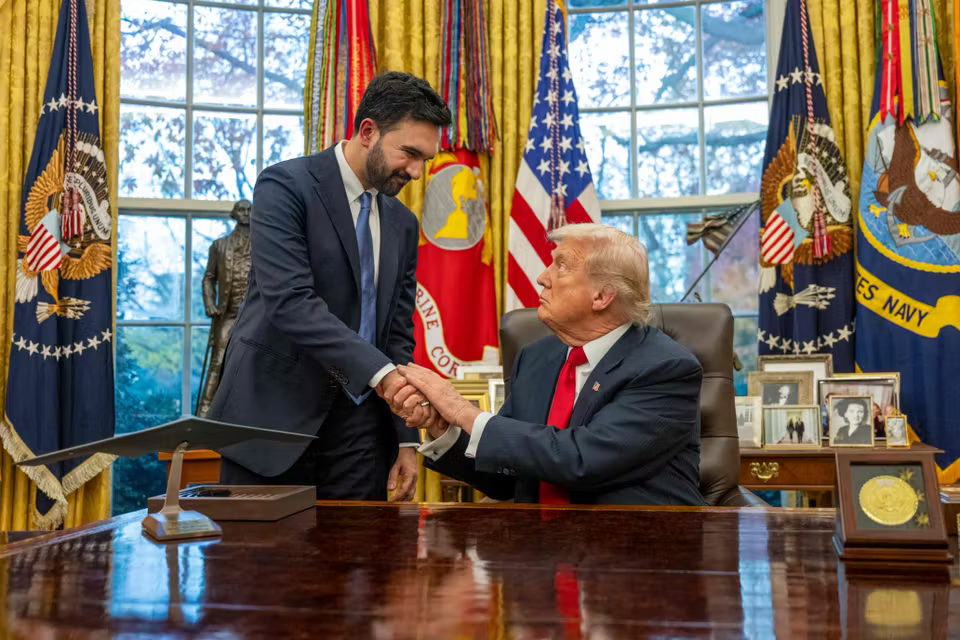
On November 21, 2025, Zohran Mamdani, newly-elected mayor of New York City and self-described democratic socialist, met in the Oval Office with President Donald Trump for what was described as a cordial and productive meeting. In public statements after the meeting, they emphasized shared concerns over housing costs, groceries, utilities and general affordability for New Yorkers.
From a socialist, working class perspective, what might be spun as pragmatic efforts to improve conditions in New York should be seen as class collaboration and opportunist reformism. While Mamdani ran a campaign stressing working class issues such as housing, childcare and cost-of-living concerns, his post-election embrace of bipartisan cooperation with a reactionary president raises serious questions about the limits of democratic socialism when it becomes collusion with the ruling class.
By meeting Trump and speaking of cooperation, Mamdani lends legitimacy to an administration responsible for racist, xenophobic and authoritarian policies — while offering no systemic challenge to capitalism, property relations, or class power.
The Campaign Frame: Anti Fascism as an Electoral Banner
Mamdani’s mayoral campaign was often cast as a direct rebuke to Trump. His rhetoric emphasized opposition to authoritarianism, xenophobia and the attacks on immigrants that Trump’s regime has championed. That rhetoric, even if sincere, amounted primarily to social democratic reformism rather than revolutionary socialism.
The campaign focused on cost-of-living issues such as housing, utilities, childcare and public transit — not on expropriating capital, abolishing private property, or building working class power outside electoral channels. The campaign’s anti-fascism became commodified for electoral gain as a tactic to mobilize broad-based working class discontent under a Democratic-Party banner.
Once elected, Mamdani’s potential for mobilization becomes constrained by the responsibilities of governance, institutional compromise and political negotiation rather than confrontation with capitalist power.
This dynamic reflects a broader trend: electoral politics as a mechanism for social democrats to co-opt radical movements, transforming it into manageable reformist projects that leave property relations intact. In the present context of a polarized bipartisan regime (Democrats vs Republicans), such strategies offer no path to revolutionary change but only class collaboration under a softer flag.
The Meeting: Class Collaboration in Action
Reports on the meeting between Mamdani and Trump confirm that the two found common ground on housing affordability, cost of living and public safety, issues central to Mamdani’s campaign.
Media coverage describes what could be called a charm offensive. According to one account, Mamdani deployed political discipline, opted for cordial, policy-focused negotiations rather than confrontation.
That on the surface may seem like savvy politics, but it actually represents opportunism. The encounter shows exactly what the classical left warns against: class collaboration under the pretense of reform instead of building independent working class power or challenging capitalist property relations.
Trump, a master of political spectacle, seized the moment. By publicly praising Mamdani, pledging federal support and recasting the “democratic socialist” mayor-elect as a partner within capitalist structures, he reframed the narrative.
The common ground found on affordability and housing masks a bigger truth: neither Trump nor Mamdani appear willing to challenge the underlying power structures that produce inequality. Instead they manage crises within the logic of the market — what amounts to social democratic triage.
Thus what passes for pragmatic governance may actually be reformist management. A “socialist” negotiating with a billionaire real estate developer and making promises about housing and affordability — but not confronting the real source of the housing crisis: private property, landlordism, speculation.
This is class collaboration paraded as pragmatism.
Throwing the City and the Working Class Under the Bus
Reported liberal watchers have cautioned that the “Trump-Mamdani show” may look promising but carries steep downsides for the left and working class. One analysis calls attention to the danger that friendly optics could normalize autocracy and undermine progressive resistance.
What is at stake is more than just municipal governance. The spectacle normalizes authoritarianism. A fascistic-leaning president engaging in friendly bipartisan collaboration with a “socialist” mayor threatens to recast dictatorship and systemic repression as normal politics.
By limiting the conversation to affordability and safety, the cooperation sidelines broader class interests: immigrants facing raids, people of color facing repression, working class communities across the U.S. subject to attacks on civil liberties and union rights, globally oppressed peoples under U.S. imperial wars.
The meeting may deliver short term relief , maybe some modest federal assistance: but it provides no structural challenge. Instead it reinforces the notion that socialists can be “responsible managers” of capitalist cities rather than agents of proletarian revolution.
In effect: localized gains for some, at the expense of revolutionary potential for all.
Toward a Revolutionary Alternative
The spectacle of the Trump-Mamdani alliance , bourgeois order buttressed by a left-identifying figure: reveals why electoral socialism alone is inadequate. Capitalist ruling classes use figures like Trump to enforce order. They use “socialist” reformists like Mamdani to provide left cover and legitimacy.
What is needed instead is independent working-class organization beyond elections: workers councils, mass strikes, grassroots solidarity, internationalism, and a decisive break with capitalist property relations.
The working class must reject opportunism. Real anti-fascism does not start with a handshake in the Oval Office. It begins with the collective assertion of class power, the rejection of bourgeois rule and the organization for proletarian emancipation.
Only such a revolutionary alternative can address the root causes of inequality, state repression, and class rule, not just patch them up with temporary reforms.
Concluding Observations
The November 21, 2025 meeting between Zohran Mamdani and Donald Trump — while framed by some as hopeful cross-partisan cooperation for the benefit of New Yorkers — should be interpreted by socialists as what it is: a demonstration of class collaboration, reformist opportunism and the limits of electoral socialism.
If left unchallenged, such a pattern risks demobilizing genuine working-class struggle, normalizing fascist-adjacent power under a veneer of pragmatism, and ultimately betraying the working class for short term reformist gains.
What is required now is serious reflection and a turn toward revolutionary organizing, not reconciliation.
What Published Observers Are Saying
- According to media reports on the meeting, Trump said “we agreed a lot more than I would have thought,” praising Mamdani and offering support for his tenure as mayor. Reuters+1
- Coverage noted that the two discussed cost-of-living issues such as rent, groceries, and utilities rather than deep structural changes. Reuters+2The Guardian+2
- Some liberal or “progressive” outlets offered caution. For example, Al Jazeera described the meeting as a warm rapprochement that caught many by surprise. Al Jazeera
- Other commentary warned that the friendly optics risk normalizing authoritarianism and undermining progressive resistance. The Guardian+1